Make it yours
Pick your answers to our starter questions, or write a few of your own.
Make a friend quiz that's all about you.
Send it to your people. See who really gets you.
Pick your answers to our starter questions, or write a few of your own.
Send your quiz to your best friend, your group chat, or someone new.
Check the leaderboard and discover which answers surprised your friends.
“You thought I'd pick that?” is a pretty good place to start.
A friend quiz starts with something simple: the little preferences that make you, you. You choose a few questions, decide which answers fit you today, and invite your friends to guess. The questions might cover your ideal weekend, your first snack choice, or the way you reply to a message. Once someone finishes, their score shows how many choices matched yours. That gives you something specific to talk about, whether the result is a perfect match or a collection of funny surprises.
Start by opening the quiz maker and entering a nickname you are happy to share. You can keep the starter questions, change their wording, or replace them with your own ideas. Each question has four choices, and you select the one you want counted as correct. Include between three and eight questions. Read the whole quiz before creating it, especially if two answers sound equally likely. Clear choices make guessing more enjoyable because your friends can focus on you instead of trying to decode the question.
When your quiz is ready, save the private manage link before sharing anything. Then send the public quiz link to the friends you want to invite. They enter a nickname, choose their answers, and receive a result. The leaderboard collects attempts so you can compare guesses. You do not need to set up an account, and your friends do not need one to answer. Keep the game relaxed: someone who just met you can still join, and someone who has known you for years can still be surprised.
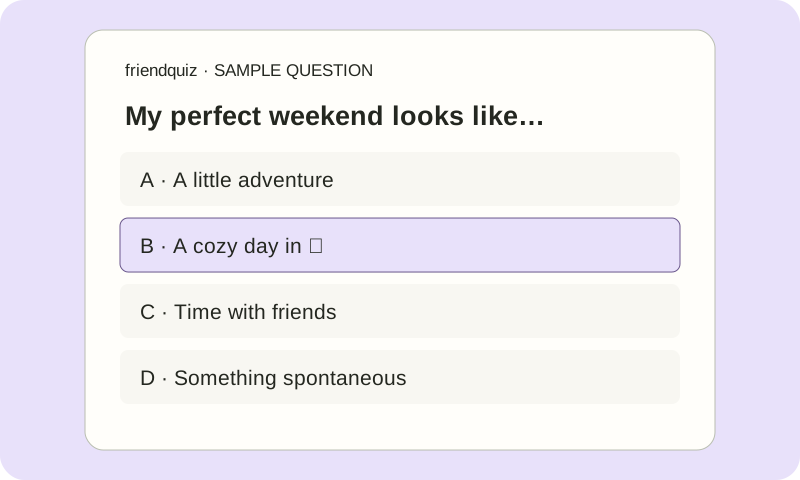
Good questions are easy to understand and interesting to discuss. Everyday preferences usually work better than obscure facts, because friends have a fair chance of reasoning from the time they spend with you. Mix a familiar topic with something they might not know yet. You can also build a theme around a shared activity, such as movie nights or weekend walks. The examples below are ideas you can adapt in the builder; their answers should come from your own preferences.
Try four choices such as exploring somewhere new, reading at home, meeting a friend, or making something creative. Think about what you would actually choose when you have no obligations. If your answer depends on the weather, add that detail to the question. “On a rainy afternoon” is more specific than “in my free time” and helps your friends picture the same situation you had in mind.
You could offer popcorn, chocolate, fruit, and crackers, or choose four snacks that fit your own routine. Make the options distinct so each guess means something. Avoid using a broad option that includes another choice: “anything sweet” and “chocolate” can both describe the same preference. A friend who remembers what you brought to a movie night may have a clue, while someone else might learn what to bring next time.
Movie night, a long walk, a board game, and trying a new café make a useful starting set. Keep the question about what you enjoy, rather than how much someone can spend or where they live. You can make all four choices inexpensive or adapt them to online hangouts. After the results, use this question to plan something together. A wrong guess can turn into a good suggestion for your next conversation.
Possible choices include a quick text, a voice note, a meme, or a reply later in the day. Pick the answer that best describes your usual habit, while remembering that nobody behaves the same way every time. Keep this playful instead of turning it into a complaint about who replies fastest. The quiz works best when the questions invite recognition and curiosity without putting anyone on the spot.
A score is the number of answers that match the creator’s selected choices. For example, matching three choices in a five-question quiz produces a score of three out of five. That is all the number measures. It does not measure trust, kindness, effort, or how much a person cares about you. A short quiz also cannot cover everything two people know about each other, especially when the questions focus on preferences that may change.
A high score can mean your friend remembers the details you included, shares similar tastes, or made some lucky guesses. A lower score can mean the questions covered topics you have not discussed, the choices were difficult to separate, or your preferences have changed. Instead of ranking your friendships, ask which answer was most surprising. “What made you choose that?” can lead to a much better conversation than simply announcing who won.
The leaderboard is for fun, too. People can attempt a quiz more than once, and nicknames are not verified identities. A later attempt may reflect something learned from an earlier one. Scores from different quizzes are not directly comparable because their questions and lengths can differ. If you invite a group, let everyone decide whether they want to participate, and avoid teasing someone who gets fewer answers right. There is no score anyone needs to achieve to count as a good friend.
Send the public quiz link in a conversation where people will understand what it is. A short introduction such as “I made a quiz about my everyday favorites; want to guess?” gives friends enough context to join. You can use the sharing controls or copy the link into your preferred messaging app. If you share a result, remember that the result page also shows nicknames and scores. Check what is visible before posting a link in a larger group.
Keep your private manage link separate from the invitation. It is the key that lets you manage and delete the quiz, so anyone who receives it could use those controls. Your browser can remember your latest manage link when local storage is available, but saving your own private copy is still useful. Clearing browser storage can remove that shortcut. There is no account recovery process to restore a lost manage link, so do not rely on remembering it later.
Use a nickname instead of a full name, and leave out contact details, home addresses, passwords, school schedules, or other sensitive information. Questions about ordinary preferences are enough to make the game personal. Do not include someone else’s private details in a question or answer choice. The quiz is intended for people aged thirteen and older, and everyone should keep the wording friendly. If a question would make someone uncomfortable in a group chat, choose another topic.
Anyone with a quiz or result link can view the shared content and leaderboard. These pages ask search engines not to index them, but that request does not make them private or prevent someone from forwarding a link. Use your saved manage page if you want to delete a quiz and its associated answers and reports. Read the privacy notice for details about stored information and browser storage, and the terms of use for participation expectations.
You can report a quiz from its quiz or result page, but this preview does not have a staffed moderation service or a promised response time. Avoid adding sensitive details to a report. If you are creating a quiz for a group, agree on friendly topics first and give people the option to skip it. A small game should leave everyone with something enjoyable to talk about, and respecting boundaries is part of making that happen.
A friend quiz is a set of questions about you. Pick your answers, share your link, and let friends guess. Their scores appear on your quiz’s leaderboard.
No signup is needed. Save your private manage link to see answers or delete your quiz. This browser also remembers that link when local storage is available.
Yes. Start with our template, edit the questions and choices, and select your own answers. Keep it friendly and avoid personal information.
Your score counts answers that match the creator’s choices. It is a conversation starter, not a measure of loyalty or the quality of a friendship.
Choose between three and eight questions, with four different choices for each question. You select one answer per question before creating the quiz.
Repeat attempts are possible, and nicknames are not verified identities. Treat the leaderboard as a playful record of guesses rather than a competition with enforced rules.
Open the private manage link you saved when creating your quiz. Confirm deletion there to remove the quiz, its answers, and its associated reports.
Anyone with the quiz or result link can see the quiz, nicknames, and leaderboard. These pages ask search engines not to index them, but links are not private.